• Home
    • About Us
      • Company History
      • Team Bios
    • Services
      • Industrial Facilities Fabrication
      • Structural and Misc. Metals
      • Custom Steel Fabrication
    • Industry FAQs
    • Steel Selection Guide
    • Contact Us

  • All Industrial Facilities Products

  • Industrial Facilities Products (8)
    Reset Filters
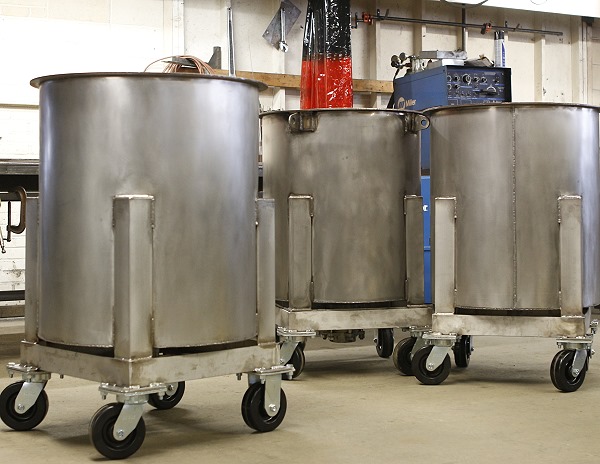
    55 GAL. STAINLESS VATS – CALL FOR PRICING

    55 GAL. STAINLESS VATS – CALL FOR PRICING

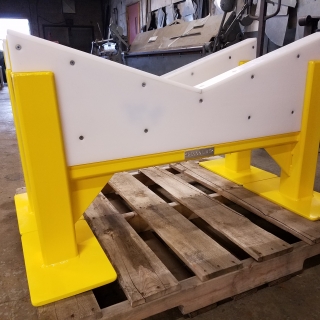
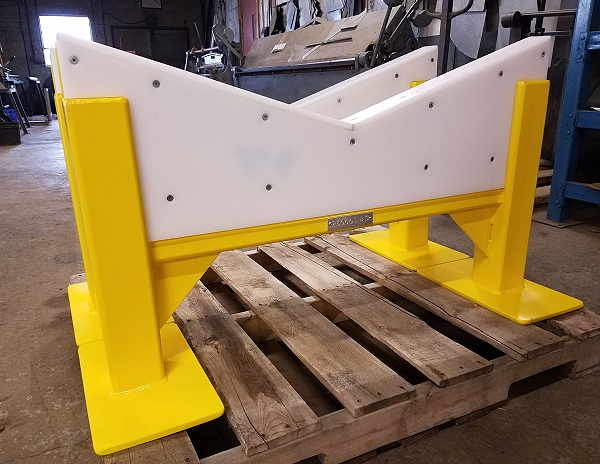
    CYLINDER STANDS – CALL FOR PRICING

    CYLINDER STANDS – CALL FOR PRICING

    DOUBLE RIGGING RACK – CALL FOR PRICING

    DOUBLE RIGGING RACK – CALL FOR PRICING

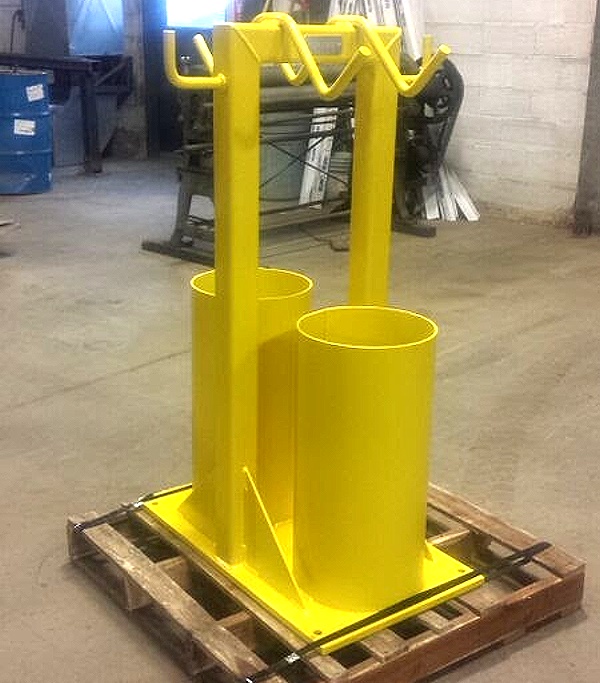
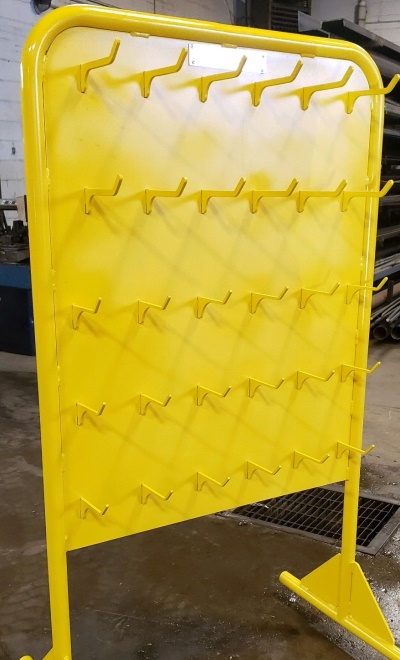
    HOIST RING RACK – CALL FOR PRICING

    HOIST RING RACK – CALL FOR PRICING

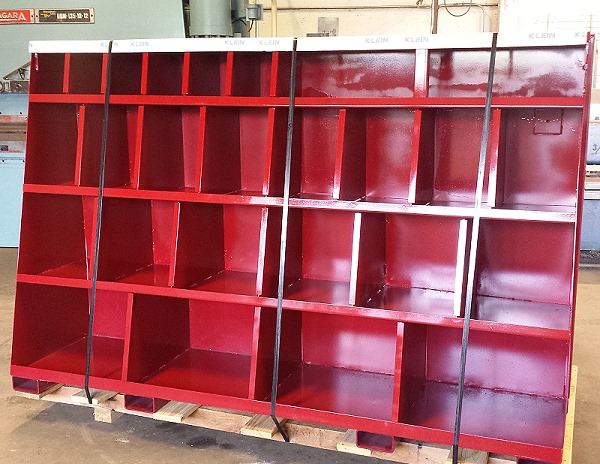
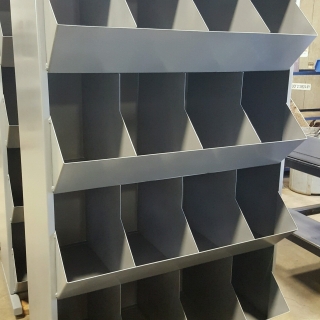
    INDUSTRIAL STORAGE BINS – CALL FOR PRICING

    INDUSTRIAL STORAGE BINS – CALL FOR PRICING

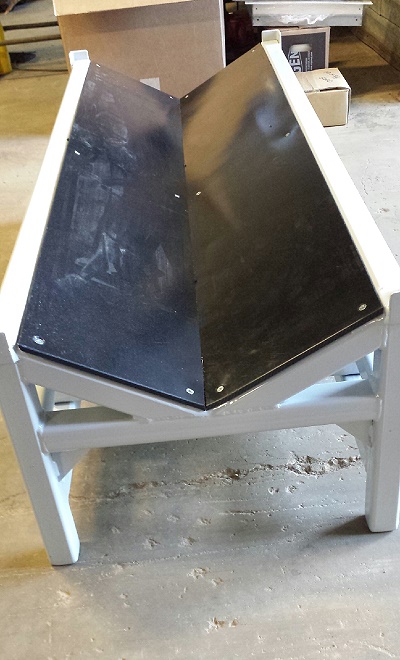
    SHAFT TRANSPORTER – CALL FOR PRICING

    SHAFT TRANSPORTER – CALL FOR PRICING

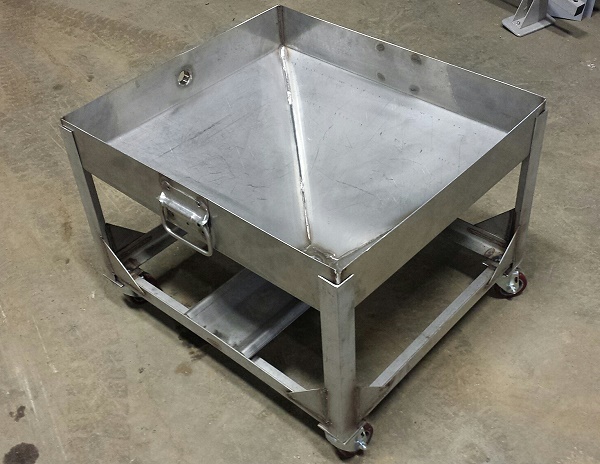
    STAINLESS STEEL HOPPER – CALL FOR PRICING

    STAINLESS STEEL HOPPER – CALL FOR PRICING

    STORAGE BINS – CALL FOR PRICING

    STORAGE BINS – CALL FOR PRICING
  • Billings Videos

  • Around the Shop NEWS

    Steel Glossary

    Bevel - is an edge of a structure that is not perpendicular to the faces of the piece.

    Burr - a deformation of metal wherein a raised edge forms on a metal part which has been machined, sheared, or otherwise changed in formation.

    Cold Rolled Steel - Is described as mild steel that is finished to its final dimension or thickness while the material is cooled and compressed.

    Computer Aided Drawing (CAD) - is the use of computers to aid in the creation, modification, analysis, or optimization of a design. CAD software is used to increase the productivity of the designer, improve the quality of design, improve communications through documentation, and to create a database for manufacturing (Wikipedia).

    DeBurring is the process of removing burrs by sanding, grinding, or hard scraping.

    Deflection - In engineering, deflection is the degree to which a structural element is displaced under a load (Wikipedia). In other words, it is amount of pressure a steel piece can withstand without changing the original form (shape) of the material.

    DOM Tubing (Drawn Over Mandrel) - A cold drawn electric resistance welded tube with all flash removed and is checked for soundness of the weld. It is normalized and cold drawn over a mandrel to create a uniform, precise product. DOM tubing exhibits excellent outside and inside diameter concentricity, often making it preferred over seamless tubing.

    Fatigue - In materials science, fatigue is the weakening of a material caused by repetitive loading that results in progressive and localized structural damage and the growth of cracks.

    Fabricate - the crafting of individual parts as a solo product or as part of a larger combined product and the building of metal structures by cutting, bending, and assembling.

    Finish – is considered the final stage of steel fabrication, a desired look of the steel product at completion. Finishes can be paint, primer, chemical, raw steel, powder coated, galvanized, etc.

    Flange - is an external or internal ridge, or rim (lip) on a beam, pipe, cylinder, etc. Depending on the location of the flange, it has multiple purposes. A flange on a beam increases its strength and deflection or it provides an edge for wheels or trolley’s. On a pipe or cylinder, it is used as a connection point.

    Flashing - refers to thin pieces of impervious material installed to prevent the passage of water into a structure from a joint or as part of a weather resistant barrier system. In modern buildings, flashing is intended to decrease water penetration at objects such as chimneys, vent pipes, walls, windows, and door openings to make buildings more durable and to reduce indoor mold problems. Metal flashing materials include lead, aluminum, copper, stainless steel, zinc alloy, and other materials (Wikipedia).

    Hot Rolled Steel – Is described as mild steel that is finished to its final dimension or thickness while it is heated.

    Inside Diameter (ID) – Also known as inner diameter or internal diameter. Is a measurement from the inside of the pipe wall in a straight line to the opposite side of the inside wall.

    Nominal Dimension – is a general term for pipe size in non-specific (not actual) terms.

    Outside Diameter (OD) – Also know as outer diameter or outside dimension. is a measurement of the distance of a straight line from one point on the outer wall of the object, through its center, to an opposite point also on the outside.

    Steel Grade – Difference in chemical make-up of steel determines its grade.

    Spring back – When bending material (steel) to reach the desired bend angle, some material may need to be bent beyond the desired final degree. The material will “spring back” or revert to a lesser degree due to the material composition and its formability.

    Oxidation - is a type of chemical reaction in which the states of atoms are changed. In steel oxidation, the composition of the steel changes from atmospheric elements and changes the composition of the steel, also known as rust.

    Tensile Strength - is the maximum stress that a material can withstand while being stretched or pulled before breaking (Wikipedia).

    Tolerance - permissible limit(s) of variation in an object. In steel fabrication it is the allowable difference in the designed measurement and the actual, finished, measurement. +/- 1/16”.

    Tonnage (with a Press Brake) - a ball screw or belt drive to exert force (tonnage) on the ram. Pneumatic presses utilize air pressure to develop tonnage on the ram which then forces material to bend or alter its shape.

    Welding Spatter - is small, unwanted droplets of molten metal emitted during the welding process.

    What are Pipe Schedules?

    Pipe schedules relates to the thickness of the pipe wall based on the inside diameter, as the inside diameter of the pipe increases the wall thickness increases.   

    Some examples:

    Pipe size 1 ¼” (nominal inside dimension) Schedule 40 has a wall thickness of .140”

    Pipe size 1 ½” (nominal inside dimension) Schedule 40 has a wall thickness of .145”

    Pipe size 1 ¼” (nominal inside dimension) Schedule 80 has a wall thickness of .191”

    Pipe size 1 ½” (nominal inside dimension) Schedule 80 has a wall thickness of .200”

    Schedule 40 pipe has a thinner wall and is ideal for low pressure applications; it is often used in hand railings, grab rails or other structural (none load bearing) uses. Schedule 80 wall has a thicker wall and can withstand a higher PSI (pressure per square inch), often used in products in industrial or chemical applications where fluids or high pressure air is being moved. Schedule 40 1 ¼” pipe can be used to a PSI of 1,800 but will burst at 10,100 PSI. Schedule 80 1 ¼” pipe can be used to a PSI of 3,000 but will burst at 13,900 PSI.

    Although Schedule 40 and 80 are the most used sizes it is also available in schedule 10, 20, 100, 120 and a few others which are not common. Schedule 40 and Schedule 80 pipe are available in pipe sizes as small as 1/8” up to 12”.

    Aluminum pipe (6061), stainless steel pipe, and galvanized pipe is also available in a variety of schedule wall thicknesses. Aluminum (6061) pipe is often used in marine (water) applications; stainless steel schedule 40 or 80 pipe is expensive but ideal in application where corrosion needs to be considered; galvanized schedule 40 pipe is a lower cost and is suitable in indoor or outdoor uses. Schedule 40 and 80 is also available in PVC pipe which is used in drainage of water. Schedule 40 or 80 steel pipe is beneficial in many steel applications because its ideal strength, workability, and lower cost.

    Schedule 40 steel pipe is quite common in BSM products. 1 ¼” and 1 ½” Schedule 40 pipe is most common used in all railing, grab rail, or toe kick products.  Check out our gallery of railing projects!

    Are steel prices "falling?"

    Yes, we are still talking about steel prices and availability. The entire economy and increased prices and availability of products are the hot topic all over the US. Shortage on Thanksgiving turkeys, yep! Shortage on Christmas presents, possibility! When will it end? Well, I can’t tell ya that, but I can tell you about the steel pricing speculations. There “supposedly” some relief in sight!

     “Steel prices are at or near a peak and can be expected to moderate in the weeks and months ahead. Whether they will ease down gradually, giving the market a chance to adjust, or drop like a stone, giving the market a painful blow, remains to be seen.”

    Packard, John and Triplett, Tim. “Steel prices set to plunge?” The Fabricator Vol. 51 No. 10 October 2021Pg 46 and 47.

    Again, market and pricing uncertainty but there’s a chance some relief is in the near future.

    What have we seen as fabricators and steel suppliers?

    • Steel distributors are offering “sales” on some excess (unpopular) products, but fabricators aren’t buying for stock. Not a good business decision to stock material at its pricing peak (even on a “sale”).

    •  Quoting jobs has become a fight of the fittest! Fabrication shops are bidding at LOW prices just to keep their shop production moving and employees busy. Often cutting their profits to minimal just to get the job.

    • The construction industry is still thriving and offering new projects daily; industries are purchasing steel projects at a slower rate and a little more cautious.

    Current steel pricing is the highest it has ever been, seriously ever! SMU (Steel Market Update) reported hot rolled coiled at $1,995/ton (September 2021) and the former highest was at $1,070/ton in 2008. Not a record we should be happy about breaking in 2020/2021. Keep your figures crossed for pricing relief in 2022.

    Is it Spatter or Slag?

    There is a lot of welding terms used to describe a welding process; let’s clarify two that often get confused.

    Spatter - Is to splash with small droplets – Wikipedia

    In welding terms – The name ‘spatter’ is given to the molten metal particles that spat from a welding process over your product and even onto the welder (human). The particles are liquefied, so they stick on many surrounding objects. If they fall on your product, they can be a menace to clean up, and if they land on the welder, they’ll burn through your clothing or skin.

    Spatter can be caused by many factors including; metal properties/condition, welding gas, welder power supply setting, metal coating, or contaminated filler.

    If spatter is on your finish weld it is suggested to remove it. The typical methods used are grinding, sanding, blasting or scraping. Grinding and sanding can be done using abrasive wheels or belts or manual or power abrasive brushes (wire brushes).

    In appearance, spatter is small dot or droplets around the weld area.

    Slag - Welding slag is vitreous material produced as a byproduct of some arc welding processes, most specifically shielded metal arc welding, submerged arc welding, and flux-cored arc welding. – Wikipedia

    In welding terms - Slag is the solidified remaining flux after the weld area cools.

    Slag is caused by the residue of the flux coating in MMA welding, it is principally a de-oxidation product from the reaction between the flux, air, and surface oxide.

    If slag is on your finished weld it must be removed by grinding, abrasive blast cleaning, wire brush, flame-cleaning, or chipping.

    In appearance, slag resembles (and covers) the shape of the weld that was produced.

    Both spatter and slag are a result of the welding process. They are caused by difference processes and have a different appearance but are equally important to remove.

  • Quick Links

  • Industrial Facilities Fabrication
  • Structural Fabrication & Installation
  • Custom Steel Fabrication
  • Our Products
  • Industry FAQs
  • Contact us
  • For More Information Call 716-372-6165

  • Billings Steel Mfg.
    1002 South Union Street
    Olean NY 14760

    Tel: 716-372-6165

    Email Us Here

  • Souther Tier Builders Assn Logo

| Login